Does GlycoAid really work for blood sugar? An honest 2026 review

Updated September 2026 · reviewed by the GlycoAid Research Team. We are an independent information resource, not a medical provider, and this article is educational rather than medical advice.
Does GlycoAid really work? The honest answer is that GlycoAid is a dietary supplement, not a medicine — so it can support a healthy blood-sugar routine, but it cannot lower blood sugar on its own, and it is not a treatment for any condition. Its value depends far more on the food, movement and consistency around it than on the capsule alone. This review separates what GlycoAid can reasonably do from what no supplement should ever promise.
Does GlycoAid work — a straight, honest reply.
- The honest verdict
- GlycoAid can support a blood-sugar-friendly routine, but it is not a treatment and will not fix blood sugar by itself.
- What it actually is
- A once-daily capsule pairing chromium with a 500 mg botanical blend — a supplement to good habits, not a substitute for them.
- Realistic timeframe
- Botanicals build support gradually; most people trial it for two to three months, and individual results vary.
- The hard boundary
- It makes no claim to diagnose, treat, cure or prevent diabetes or any disease — and neither do we.
“Does it actually work?” is the fairest question you can ask about any blood-sugar supplement, and it deserves a fair answer rather than hype. Below we walk through what GlycoAid is, what the evidence behind its ingredients does and doesn’t show, what results are realistic, and where the honest line sits between support and medical claims.
What is GlycoAid, and what does it actually claim?
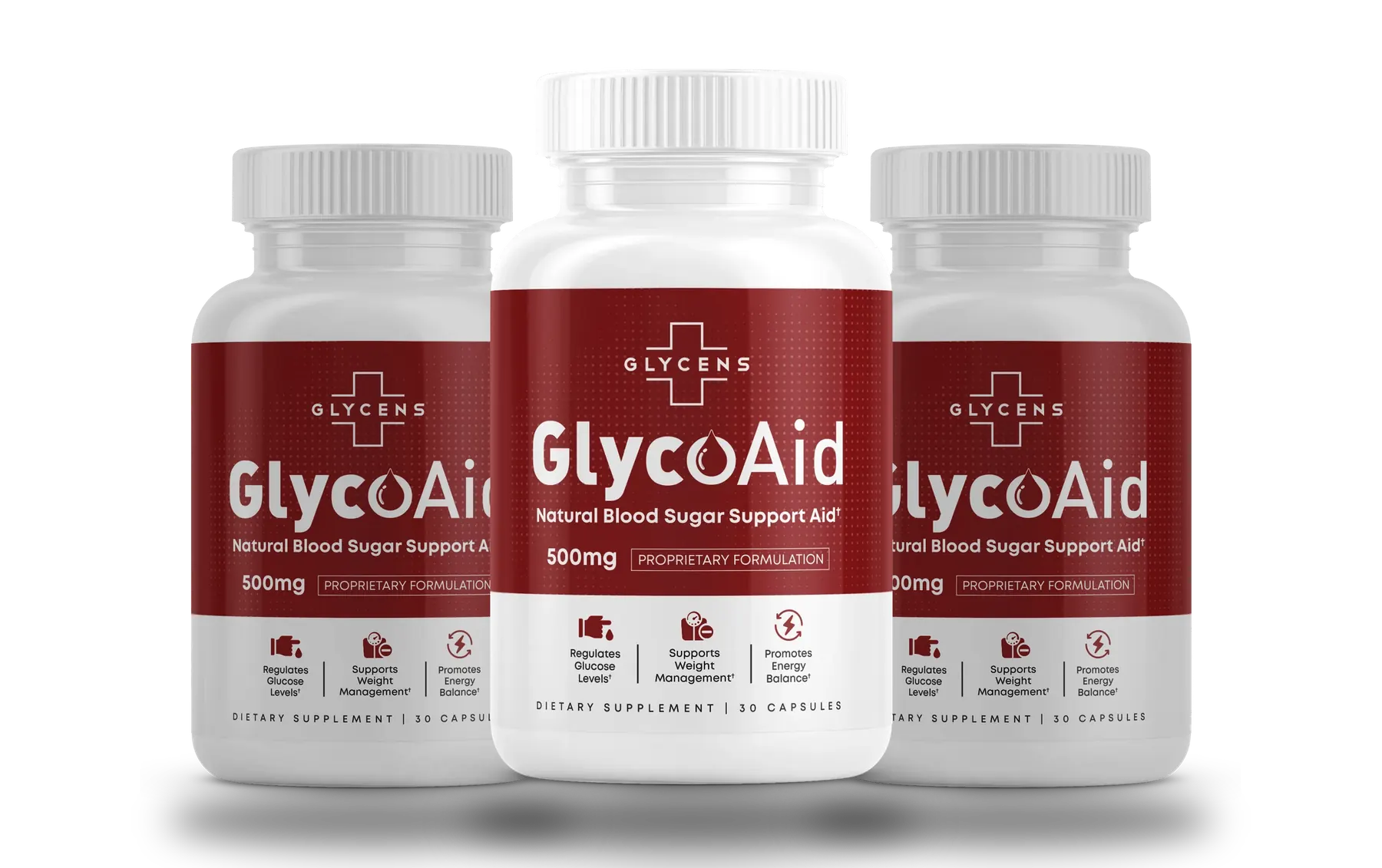
GlycoAid is a once-daily capsule dietary supplement built on chromium and a 500 mg botanical blend, marketed for everyday blood-sugar support in people whose glucose is already within a normal range. That framing matters: it is positioned as a wellness product, not a therapy. The label pairs an essential trace mineral with familiar culinary and traditional botanicals — cinnamon, berberine, banaba leaf, gymnema and bitter melon — the same plants that appear across the everyday blood-sugar-wellness category.
Crucially, GlycoAid does not claim to lower blood sugar as a drug does, nor to treat or prevent diabetes. Any review that promises otherwise is over-reaching. What GlycoAid claims is narrower and more defensible: to make one supportive habit — a consistent, well-formulated daily capsule — easy to keep. Whether that is worth it to you is exactly what the rest of this article is for.
Does GlycoAid really work? What the evidence supports
Whether GlycoAid “works” depends on what you expect it to do, because the evidence behind its ingredients is about general metabolic support, not disease treatment. Here is the honest picture: some components have a recognised nutritional role, others have long traditional use with mixed or preliminary human research, and none amount to proof that the finished product changes any medical outcome. For the underlying research, see Asbaghi et al., Pharmacological Research 2020 — a systematic review and meta-analysis of chromium supplementation and glycemic control.
Which GlycoAid ingredients have the most support?
The table below rates each ingredient by the strength of its general evidence — not as a claim about GlycoAid itself.
| Ingredient | Recognised or traditional role | Strength of general evidence |
|---|---|---|
| Chromium | Essential trace mineral; contributes to normal macronutrient metabolism | Established nutritional role; benefit in well-nourished people is modest |
| Berberine | Plant compound widely studied for metabolic wellness | Among the more-studied botanicals, but human data is mixed and varies by dose |
| Cinnamon | Culinary spice popular in blood-sugar-wellness formulas | Popular and widely used; human evidence is inconsistent |
| Gymnema | Ayurvedic herb known as the “sugar destroyer” | Long tradition; modern human evidence is limited and preliminary |
| Banaba & bitter melon | Traditional South-East Asian and folk botanicals | Traditional use; early-stage research, not conclusive |
Read that table plainly: these are supportive nutrients with sensible roles, not medicines with proven effects on disease. That is not a knock on GlycoAid — it is the reality of the entire supplement category, and an honest expectation is the best foundation for judging value. For a deeper look at two of the headline ingredients, see our guide to berberine and cinnamon for blood sugar.
Want to see the exact dose?
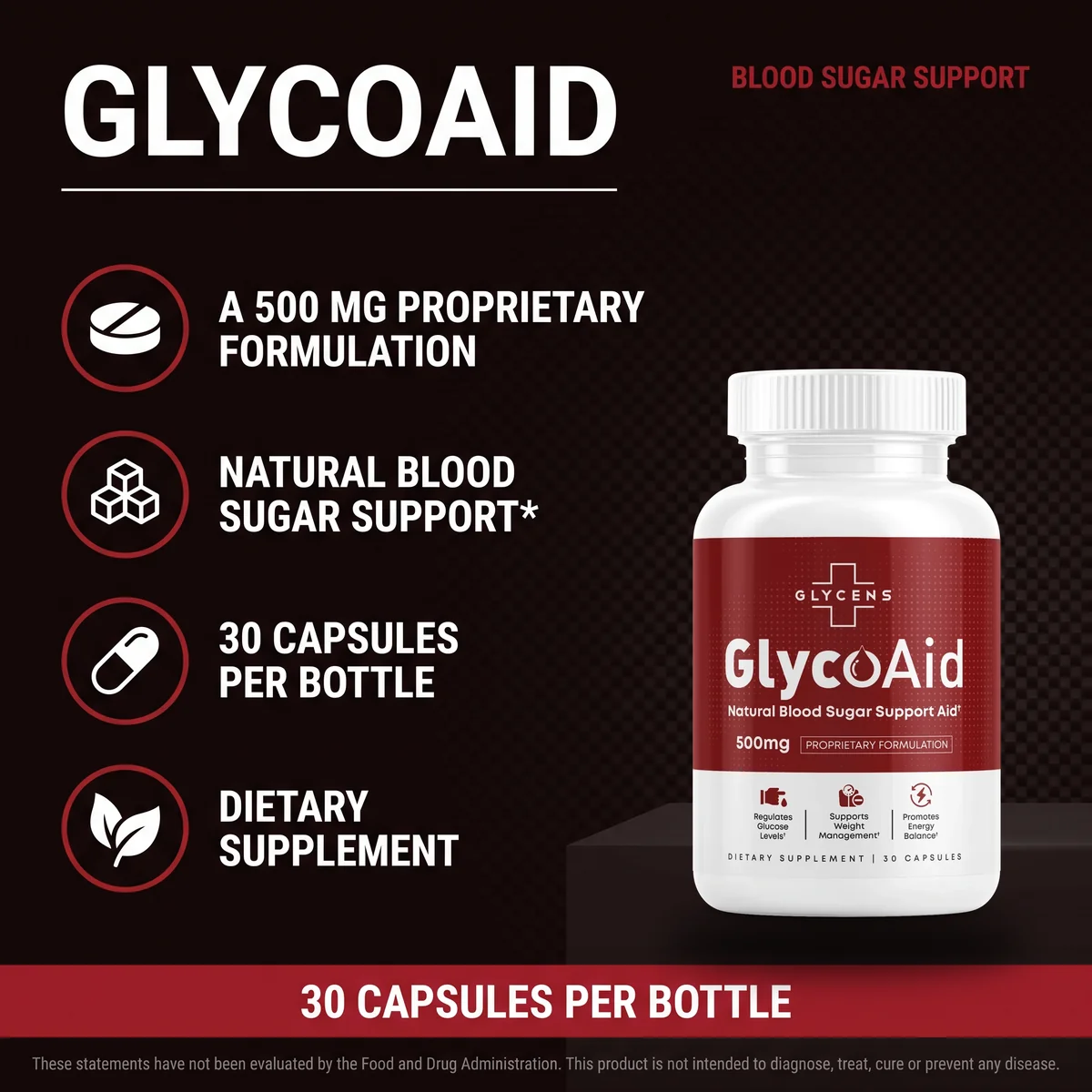
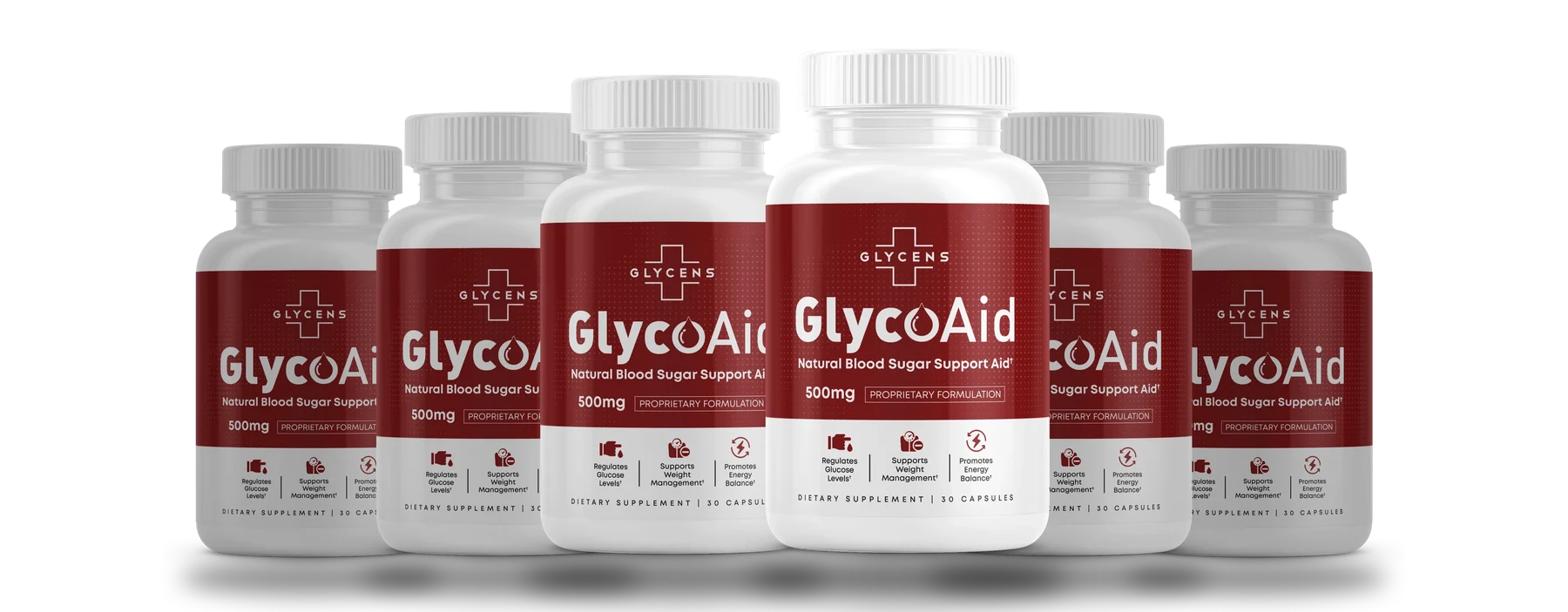
The label lists chromium plus a 500 mg botanical blend in one daily capsule. See the exact dose in GlycoAid and today’s bundle pricing — the six-bottle option is the best value with free U.S. shipping and a 60-day guarantee.
Check today’s GlycoAid pricing →How long does GlycoAid take to work?
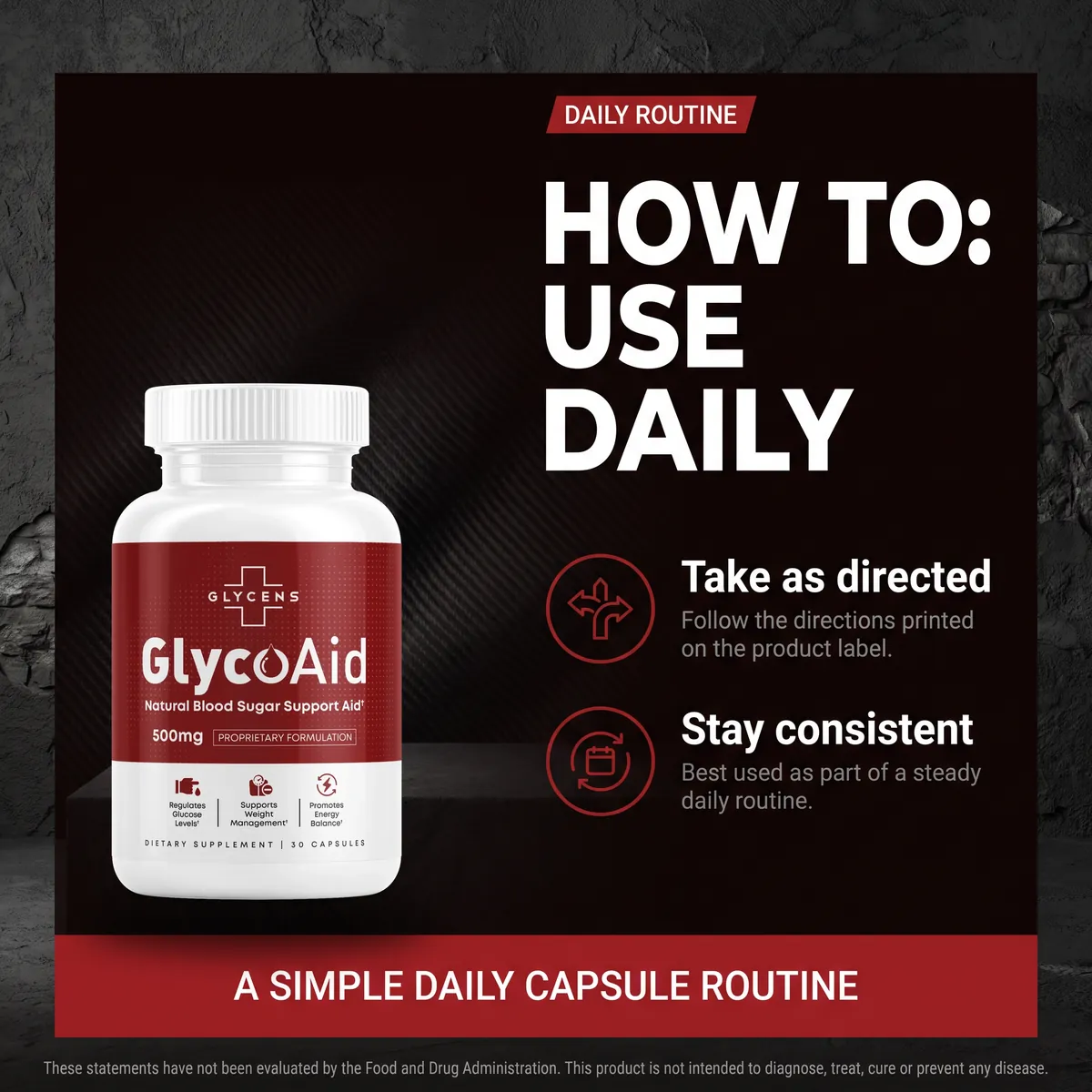
GlycoAid is designed as a slow, supportive habit rather than a fast-acting remedy, so a fair trial is measured in months, not days. Botanicals build their support gradually, and any change you notice will reflect your whole routine — meals, movement and sleep — not the capsule in isolation. There is no guaranteed timeline, and individual results vary; anyone promising a specific number by a specific date is selling certainty that does not exist. The evidence base for this point is set out in NIH NCCIH — Diabetes and Dietary Supplements, the federal summary of what supplements have and have not been shown to do here.
The realistic checkpoints below help set expectations without over-promising.
| Timeframe | What is realistic | What is not realistic |
|---|---|---|
| Week 1 | Building the daily habit; taking one capsule with a meal | A measurable drop attributable to the capsule |
| Weeks 2–4 | Routine feels automatic; pairing it with post-meal walks | Replacing any medication or medical guidance |
| Months 2–3 | A fair window to judge whether the routine suits you | A cure, or a guaranteed personal result |
What results can you realistically expect from GlycoAid?
Realistically, the best result GlycoAid offers most people is a convenient, repeatable habit that sits alongside the choices doing the real work — steadier meals, a short walk after eating, and regular sleep. A supplement cannot out-perform the fundamentals, and it was never meant to. If you are looking for a dramatic overnight change, no capsule — GlycoAid included — will deliver it, and honesty here saves disappointment later.
Where does GlycoAid genuinely help?
Where a product like this genuinely helps is friction: remembering one capsule is easier than mixing a powder or juggling five jars, which makes the supportive routine easier to keep. Consistency, not intensity, turns any healthy habit into a steadier month. For the fundamentals that matter most, see our guide to supporting healthy blood sugar naturally.
What GlycoAid can’t do: the no-medical-claims boundary
GlycoAid cannot diagnose, treat, cure or prevent diabetes or any other disease — and understanding that boundary is central to answering whether it “works.” It is a supplement, which by definition supports a healthy lifestyle rather than acting as therapy. It is not a substitute for prescribed medication, and it is not a reason to delay medical care. These are not fine-print hedges; they are the honest limits of what any blood-sugar supplement can claim. This is documented in NIH Office of Dietary Supplements — Chromium, the federal fact sheet on chromium intakes and its recognised metabolic role.
When should you talk to a doctor first?
If you take glucose-lowering medication, have a diagnosed condition, are pregnant or nursing, are under 18, or notice persistent symptoms such as excessive thirst, frequent urination or unexplained fatigue, speak with your doctor before adding GlycoAid. A short conversation ensures a supplement fits safely with your care.
Is GlycoAid legit, or is it a scam?
GlycoAid is a legitimate, purchasable supplement rather than a scam, judged by the ordinary marks of a real product: a disclosed formula, a listed manufacturer address, a 60-day money-back guarantee and clear compliance language. Those features do not prove the product will work for you — nothing can — but they distinguish a genuine offer from a fraudulent one.
The genuine red flags in this category are different: claims of curing diabetes, “doctors hate this” theatrics, fake countdown timers, or invented clinical trials. GlycoAid’s honest positioning — support, not treatment — is a point in its favour. The reasonable way to judge value is to weigh the transparent formula and guarantee against the price, and to keep expectations aligned with what a supplement can do. You can read our full GlycoAid review for the complete breakdown.
Who is GlycoAid actually for?
GlycoAid is aimed at adults who already eat reasonably, move regularly and simply want one convenient botanical-and-mineral capsule to round out a blood-sugar-friendly routine. It is not for anyone hoping to replace medication, reverse a diagnosis, or skip the diet-and-activity fundamentals — those expectations are exactly where supplements disappoint. If you would keep the healthy habits with or without it, GlycoAid is a low-friction add-on; if you are counting on the capsule to do the work alone, it will not.
Frequently asked questions
Does GlycoAid really work for blood sugar?
GlycoAid is a dietary supplement, so the honest answer is that it can support a healthy routine but it is not a treatment and cannot lower blood sugar on its own. Its ingredients — chromium and a 500 mg botanical blend — have general roles in metabolism and long traditions in blood-sugar wellness, and results depend heavily on diet, activity and consistency. It works best as one steady habit alongside food and movement, not as a stand-alone fix.
How long does GlycoAid take to work?
Botanicals build their support gradually, so most people give GlycoAid a fair trial of two to three months rather than judging it in a week. There is no guaranteed timeline, individual results vary, and any change you notice reflects the whole routine — diet, movement and sleep — not the capsule alone.
Is GlycoAid legit or a scam?
GlycoAid is a real, purchasable supplement with a labelled formula, a 60-day money-back guarantee and a listed manufacturer address, which are the marks of a legitimate product rather than a scam. What would be misleading is any promise that it treats or cures diabetes — GlycoAid makes no such claim, and neither should any honest review.
Can GlycoAid replace my diabetes medication?
No. GlycoAid is not a drug and is not a substitute for prescribed medication or medical care. If you take glucose-lowering medicine or have a diagnosed condition, talk to your doctor before adding any supplement, because combining them without guidance can affect your numbers.
Are there any GlycoAid side effects?
GlycoAid uses well-known food-derived botanicals and chromium at everyday amounts, and most people tolerate them well, though some notice mild digestive changes when starting any botanical blend. Anyone pregnant, nursing, under 18 or on medication should check with a healthcare professional first.
What results can I realistically expect from GlycoAid?
Realistically, expect GlycoAid to act as a convenient support to the habits that do the heavy lifting — steadier meals, post-meal walks and regular sleep — not as a source of dramatic overnight change. The most reliable outcome people describe is simply keeping a consistent daily routine, and any benefit is gradual and varies from person to person.
See the exact dose in GlycoAid →
GlycoAid is a dietary supplement, not a treatment for any medical condition. These statements have not been evaluated by the Food and Drug Administration. This product is not intended to diagnose, treat, cure or prevent any disease. Always consult a qualified healthcare professional about your individual needs.
References & further reading
- National Institutes of Health, Office of Dietary Supplements. Chromium — Fact Sheet for Health Professionals. ods.od.nih.gov/factsheets/Chromium-HealthProfessional
- National Center for Complementary and Integrative Health (NCCIH). Diabetes and Dietary Supplements: What You Need To Know. nccih.nih.gov/health/diabetes-and-dietary-supplements
- National Center for Complementary and Integrative Health (NCCIH). Cinnamon. nccih.nih.gov/health/cinnamon
- Examine.com. Berberine — evidence-based summary. examine.com/supplements/berberine
- Mayo Clinic. Diabetes management: How lifestyle, daily routine affect blood sugar. mayoclinic.org/diseases-conditions/diabetes
These references describe the ingredients and habits in general terms and do not constitute evidence that any product treats, cures or prevents any condition.
Keep reading: the best foods to balance blood sugar · how to support blood sugar naturally · back to the GlycoAid blog · homepage.