What are healthy blood sugar levels? A plain-language GlycoAid guide

Updated September 2026 · reviewed by the GlycoAid Research Team. We are an independent information resource, not a medical provider, and this article is educational rather than medical advice.
Healthy blood sugar levels are the range of glucose in your blood that most adults without diabetes sit in across the day — commonly cited as a fasting reading of about 70–99 mg/dL, under 140 mg/dL two hours after a meal, and an A1C below 5.7 percent. Those are general reference figures rather than a personal diagnosis, and the aim for everyday wellness is simply to keep your numbers steady and within range.
What "healthy blood sugar" means, in one place.
- Fasting range
- For adults without diabetes, roughly 70–99 mg/dL before eating is the widely cited normal band.
- After a meal
- Generally under about 140 mg/dL two hours after eating, then a gentle drift back toward fasting.
- A1C
- A three-month average below 5.7 percent is the usual reference for people without diabetes.
- The real goal
- Steadiness — softer peaks and shallower dips — matters more day-to-day than any single number.
- Where GlycoAid fits
- It supports glucose already within a normal range; it is not a treatment for high blood sugar or any disease.
“What counts as healthy blood sugar?” is a top question in glucose health, and the honest answer is a small set of reference ranges plus one bigger idea: consistency. This primer explains the numbers plainly and shows where a botanical formula like GlycoAid can play a supporting role.
What are healthy blood sugar levels?
Healthy blood sugar levels are the concentrations of glucose that a body without diabetes maintains through the day: lower after a stretch without food, a controlled rise after eating, and a return toward baseline within a couple of hours. Blood sugar — measured in milligrams per decilitre (mg/dL) in the United States, or millimoles per litre (mmol/L) elsewhere — is never a single fixed figure. What clinicians call “normal” is a band you spend most of your time inside, not a line you must hit exactly. For the underlying research, see NIDDK — The A1C Test and Diabetes — the federal explainer on A1C and the diagnostic thresholds.
| Measurement | Normal (no diabetes) | Elevated / “pre” range |
|---|---|---|
| Fasting glucose | About 70–99 mg/dL | 100–125 mg/dL |
| 2 hours after a meal | Under ~140 mg/dL | 140–199 mg/dL |
| A1C (3-month average) | Below 5.7% | 5.7–6.4% |
These figures come from widely published reference ranges and are meant for orientation, not self-diagnosis — only a healthcare professional can interpret your results in context.
Why do healthy blood sugar levels matter?
Blood sugar matters because glucose is your body’s main everyday fuel, and how smoothly it moves from your blood into your cells shapes how you feel hour to hour. When levels are steady, energy tends to be even and cravings are quieter. When they swing sharply — a spike after a refined-carbohydrate meal, then a crash an hour later — you feel it as the mid-afternoon slump. For most people the practical goal is not a perfect number but softer peaks and valleys.

How does blood sugar rise and fall through the day?
A healthy blood sugar pattern is a gentle wave rather than a jagged line: a controlled rise after eating and an unhurried return toward the fasting range. When you eat carbohydrates, digestion breaks them into glucose, which enters the bloodstream and prompts the pancreas to release insulin, the hormone that ushers glucose into your cells for energy. The shape of that wave depends heavily on what you eat.
What happens after a high-fibre, whole-food meal?
Fibre, protein and fat slow digestion, so glucose enters the blood gradually and the after-meal rise is a soft hill — which is why whole, intact foods are the foundation of steady numbers.
What happens after a refined-carbohydrate meal?
White bread, sugary drinks and refined snacks digest quickly, sending glucose up in a sharp spike and, an hour or two later, down in a steeper dip that often registers as hunger or fatigue and repeats the cycle.

What affects your blood sugar levels day to day?
Everyday blood sugar is shaped by far more than dessert; food, movement, sleep, stress and hydration all pull the wave wider or gentler. That is why a healthy range is something you support with habits, not willpower alone. The evidence base for this point is set out in Sondrup et al., Sleep Medicine Reviews 2022, a systematic review and meta-analysis of sleep manipulation and markers of insulin sensitivity.
- What you eat — the balance of fibre, protein and fat versus refined carbohydrate is the biggest influence on the after-meal rise.
- How you move — muscles clear glucose most eagerly right after you eat, so a short post-meal walk flattens a spike.
- Sleep — a short night raises stress hormones that can push glucose higher the next day.
- Stress — chronic stress keeps cortisol elevated, nudging blood sugar up even without food.
- Hydration and drinks — sugary drinks spike glucose fastest, while water and unsweetened tea keep things steady.
See the exact dose in GlycoAid →
How can you keep blood sugar within a healthy range naturally?
Keeping blood sugar in a healthy range naturally comes down to a handful of repeatable habits that soften peaks and shallow the dips. They stack — each helping a little on its own and a lot together — and none requires an overhaul. This is documented in Knowler et al., New England Journal of Medicine 2002, the Diabetes Prevention Program, the landmark trial of lifestyle change and metformin.
- Build meals around fibre, protein and whole foods so glucose enters the blood slowly.
- Eat vegetables and protein before the starchy part of a meal to blunt the rise.
- Take a 10–15 minute walk after your largest meal to help muscles clear glucose.
- Swap one sugary drink a day for water or unsweetened tea.
- Protect a consistent bedtime so sleep does its quiet work.
- Stay hydrated and watch for liquid sugar in juices and specialty coffees.
For a deeper walkthrough, see our guide to supporting healthy blood sugar naturally and the roundup of the best foods to balance blood sugar.
Where does GlycoAid fit into a healthy-range routine?
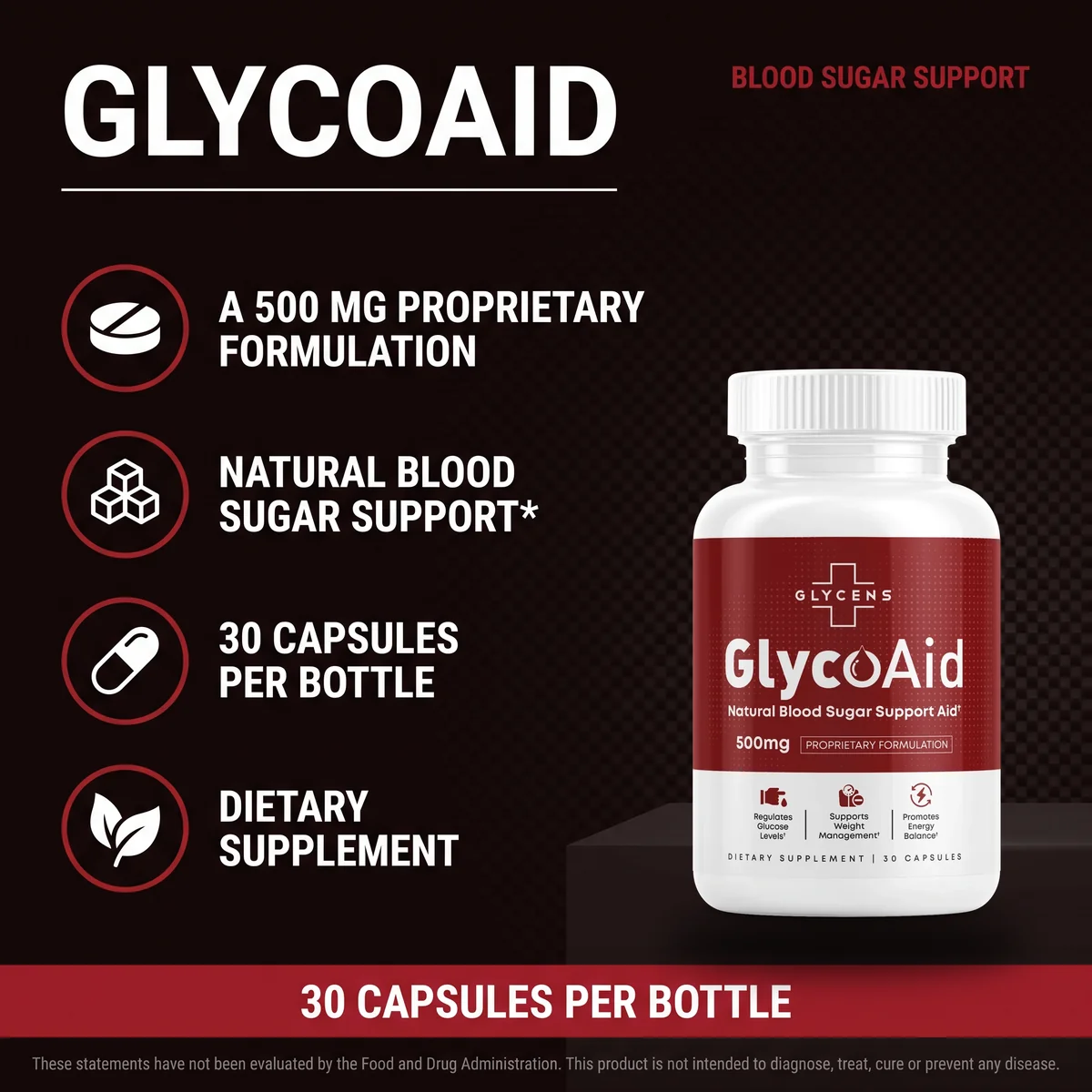
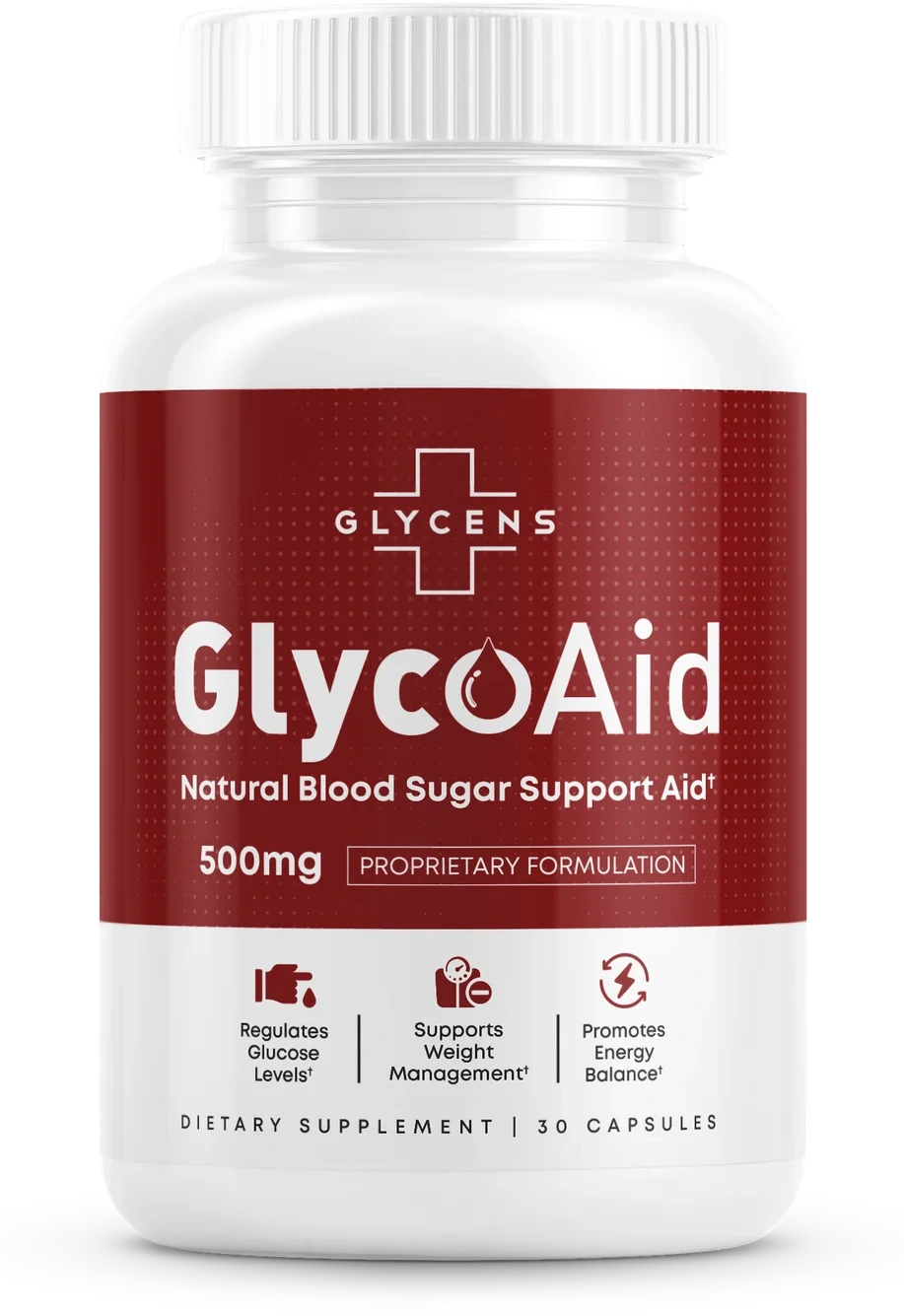
GlycoAid is a once-daily capsule that supports blood sugar already within a normal range by pairing an essential trace mineral with a botanical blend — a supplement to good habits, never a substitute or a treatment for any condition. Several of its ingredients have long been part of the glucose-health conversation, as the table below sets out.
| Ingredient | Type | Traditional / general role |
|---|---|---|
| Chromium | Essential trace mineral | Contributes to normal macronutrient metabolism — the everyday processing of carbohydrates, fats and proteins. |
| Cinnamon | Culinary botanical | One of the oldest spices and a popular ingredient in everyday blood-sugar-wellness formulas. |
| Berberine | Plant compound | A widely studied botanical extract found in barberry and other plants, common in metabolic-wellness formulas. |
| Gymnema | Ayurvedic botanical | Known as gurmar, or “sugar destroyer”; among the most researched herbs for everyday blood-sugar wellness. |
| Banaba leaf | Corosolic-acid source | A tropical leaf traditionally brewed in South-East Asia and studied for metabolic wellness. |
GlycoAid brings these together as chromium plus a 500 mg botanical blend in one capsule. For a closer look, read our explainer on berberine and cinnamon for blood sugar, or browse the full ingredients section.
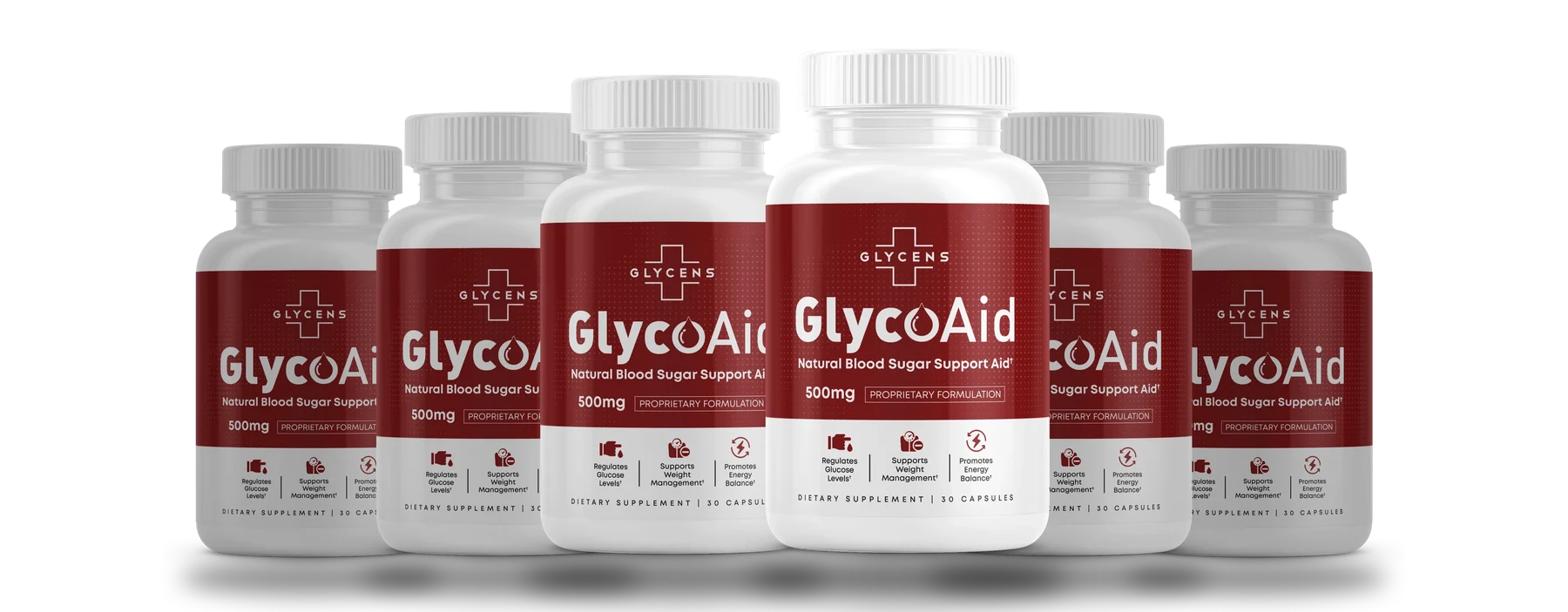
Support your range every day
GlycoAid is a once-daily capsule pairing chromium with a 500 mg botanical blend. The six-bottle bundle is best value at $49 per bottle, with free U.S. shipping and a 60-day guarantee.
Check today’s GlycoAid pricing — from $49/bottleHow do you read a blood sugar chart at a glance?
A blood sugar chart is simply a way to see, at a glance, which band a reading falls into. The quick reference below combines the common measurements so you can orient yourself, then bring questions to a professional.
| Reading | Normal | Elevated | What to do |
|---|---|---|---|
| Fasting (mg/dL) | 70–99 | 100–125 | Note the trend; discuss repeats with a doctor |
| 2-hr post-meal (mg/dL) | <140 | 140–199 | Review meal balance and after-meal walks |
| A1C (%) | <5.7 | 5.7–6.4 | Book a check-up for context |
One reading is a snapshot, not the whole story — hydration, stress, poor sleep or a recent meal can all move a single number. Patterns over weeks matter far more, which is why steady daily habits pay off gradually. Botanicals build their support over time, so most people choose a multi-month supply; compare the packages and pricing.
When should you talk to a doctor about your blood sugar?
Reference ranges are for orientation, not diagnosis, so persistent readings outside the normal band are a reason to see a professional rather than to worry alone. Speak with your doctor if you are pregnant or nursing, under 18, take any medication (especially glucose-lowering medicine), have a diagnosed condition, or notice symptoms such as excessive thirst, frequent urination, unexplained weight change or ongoing fatigue. A quick conversation ensures your numbers are read in context.
Frequently asked questions
What is a healthy blood sugar level?
For adults without diabetes, commonly cited reference ranges are a fasting glucose of about 70–99 mg/dL, an under-140 mg/dL reading two hours after a meal, and an A1C below 5.7 percent. These are general figures, not a personal diagnosis, and your own targets should come from your doctor.
What is a normal blood sugar range after eating?
In people without diabetes, blood sugar usually peaks within an hour or two of eating and generally stays below about 140 mg/dL at the two-hour mark before returning toward the fasting range. A gentle, gradual rise and fall is the pattern most associated with steady energy.
What blood sugar level is too high?
Clinicians describe fasting readings of 100–125 mg/dL or an A1C of 5.7–6.4 percent as elevated, and higher numbers as the diabetes range. Only a healthcare professional can interpret your results, so persistent high readings are a reason to book an appointment rather than self-diagnose.
How can I keep my blood sugar in a healthy range naturally?
Build meals around fibre, protein and whole foods, eat vegetables and protein before starch, take a short walk after your largest meal, protect regular sleep, and stay hydrated. Well-studied nutrients such as chromium can support the routine, but they are not a treatment.
Does GlycoAid lower blood sugar?
GlycoAid is a dietary supplement intended to support blood sugar that is already within a normal range, not a medicine that lowers or treats high blood sugar. It pairs chromium with a 500 mg botanical blend and works alongside diet and activity, not instead of medical care.
How often should I check my blood sugar levels?
People without diabetes usually only see a fasting glucose or A1C at routine check-ups, while anyone on glucose-related medication follows the monitoring schedule their doctor sets. If you are curious about your own pattern, ask your clinician what testing makes sense for you.
Try GlycoAid risk-free for 60 days →
GlycoAid is a dietary supplement, not a treatment for any medical condition. These statements have not been evaluated by the Food and Drug Administration. This product is not intended to diagnose, treat, cure or prevent any disease. Always consult a qualified healthcare professional.
References & further reading
- MedlinePlus / U.S. National Library of Medicine. Blood Sugar. medlineplus.gov/bloodsugar.html
- National Institute of Diabetes and Digestive and Kidney Diseases (NIH). The A1C Test & Diabetes. niddk.nih.gov/health-information/diagnosis-diabetes-prediabetes/a1c-test
- National Institutes of Health, Office of Dietary Supplements. Chromium — Fact Sheet for Health Professionals. ods.od.nih.gov/factsheets/Chromium-HealthProfessional
- National Center for Complementary and Integrative Health (NCCIH). Diabetes and Dietary Supplements. nccih.nih.gov/health/diabetes-and-dietary-supplements
- Mayo Clinic. Blood sugar testing: Why, when and how. mayoclinic.org/diseases-conditions/diabetes/in-depth/blood-sugar
- Examine.com. Berberine — evidence-based summary. examine.com/supplements/berberine
These references describe blood sugar measurement and the ingredients in general terms and are not evidence that any product treats or prevents any condition.
Keep reading: supporting healthy blood sugar naturally · best foods to balance blood sugar · the GlycoAid blog · homepage.